
Recycle Right
All residents are required to recycle. Learn how to set up recycling and trash service at your home.
How to recycle right
- Do not use plastic bags. Place recyclables loose in your recycling cart or in a paper bag.
- Empty and dry bottles, jars and containers. They don't have to be perfect — just free of most residue.
- Leave caps on containers.
- Empty and flatten boxes.

What to recycle
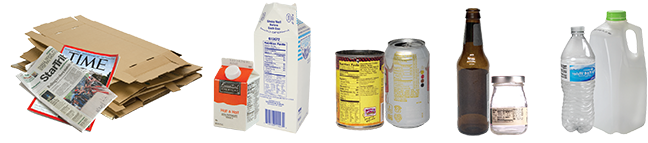
Paper
- Newspaper and inserts
- Magazines and catalogs
- Mail and office papers
Cardboard
- Corrugated cardboard
- Paperboard (e.g., cracker boxes)
Cartons
- Milk and juice cartons
- Soup, broth, and wine cartons
- Juice boxes
Metal cans
- Aluminum, tin, and steel cans
Glass bottles and jars
Plastic bottles, containers and jugs
- Containers numbered 1, 2 or 5
- Soda, juice and water bottles
- Milk and juice jugs
- Margarine, cottage cheese, cream cheese and other tubs and lids
- Laundry detergent bottles and jugs
- Clear berry and produce containers
- Batteries
- Black plastic
- Ceramic dishware
- Clothing and textiles
- Food
- Household hazardous waste/hazardous waste
- Paper plates, cups, and napkins
- Diapers
- Pharmaceuticals and medicines/medical waste
- Plastic bags and film
- Metal cylinders (e.g., propane tanks)
- Scrap metal* (e.g., metal pots and pans)
- Shredded paper
- Styrofoam™
- Tanglers (e.g., chains, extension cords, hoses, string lights)
- Trash
- Yard waste and natural Christmas trees
- All items banned from being placed in the trash or recycling in state or local law – including:
- Electronics
- Major Appliances
- Sharps (e.g., lancets, needles, syringes)
- Tires
*Scrap metal is allowed in carts and dumpsters only if delivered to the Tennis Sanitation recycling facility.
For more information, contact: