
Radon
Radon is a colorless and odorless gas that is naturally found in soil. Radon can enter a home or building in many ways and accumulate in the air we breathe. Radon gas breaks down into fine particles that are radioactive. When inhaled, these fine particles can damage the lungs. Exposure to radon over a long period of time can lead to lung cancer.
It is estimated that 21,000 people in the United States die each year from lung cancer due to radon exposure. A radon test is the only way to know how much radon is in your home. Radon can be reduced with a mitigation system.
Test for radon
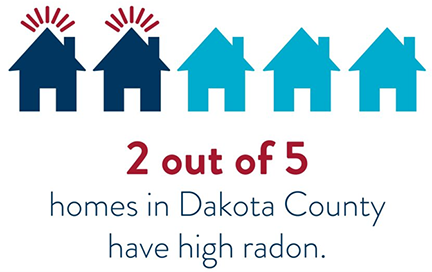
Dakota County Public Health recommends that every home in our community be tested for radon. Colder months are an especially good time to test, as heating systems tend to draw in radon gas from the soil, increasing radon levels in the home.
Dakota County offers radon test kits to county residents for $10 each. Test kits can be purchased from Public Health at:
- Western Service Center, second floor
- Northern Service Center, fourth floor
Up to five test kits can be purchased per visit using credit card, check or exact cash. To purchase more than five kits, contact the Public Health Department at 952-891-7500. Public Health does not mail kits and is unable to distribute them to businesses, including real estate agents.
Radon test kits are also available at local hardware and home improvement stores. Some kits require an additional fee to analyze your results. When you purchase a kit, check to see if the purchase price includes lab analysis.
Radon health risks
Radon is the number one cause of lung cancer for nonsmokers and the second-leading cause of lung cancer in smokers. Your risk for lung cancer increases with higher levels of radon and longer periods of exposure. If you smoke, the combined risk of smoking and radon exposure is higher. Reducing smoking and radon exposure greatly reduces lung cancer risk.